

Some Minnesotans are joyful when they do the last mow of fall because they won’t have to do it for another 6 or 7 months. Others may be a little glum because it’s an official end to warmer weather. Whatever your feelings are, the last mow is necessary for your yard to have the best chance to survive the winter.
I’ve seen firsthand, over the past few decades, the advantages of planning the last mow of fall. Some people leave their grass long, thinking they’re “insulating” the yard. Then they have mold or rodents in the spring. Some people approach the last mow like a barber that only knows how to do crew cuts. Then they find dead spots when the snow melts.
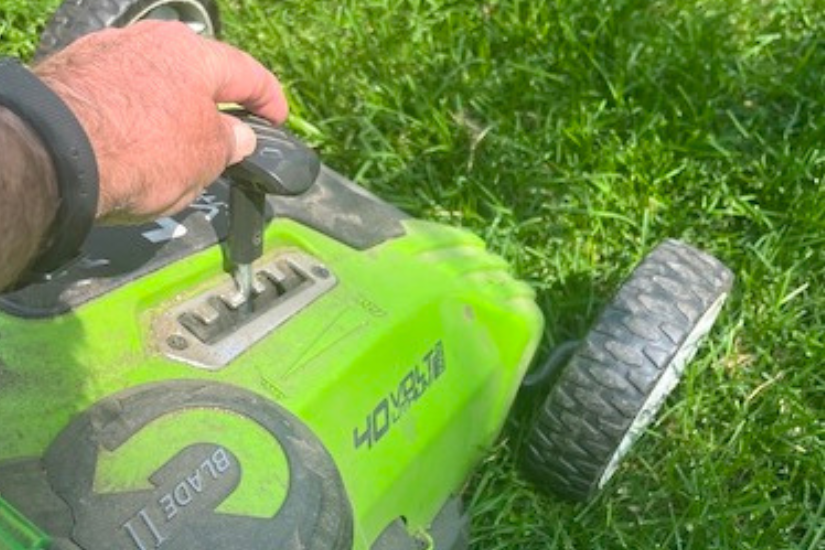
It’s important to find the right height for the last cut of the year. Our friends at University of Minnesota Extension have some great guidelines to help you out. They advise that it’s important to continue mowing until the grass stops growing in the fall, generally around the end of October. There are a number of benefits to mowing your lawn a little shorter:
- Makes collecting tree leaf litter easier.
- Reduces the risk of snow mold diseases.
- Reduces damage from burrowing rodents like voles.
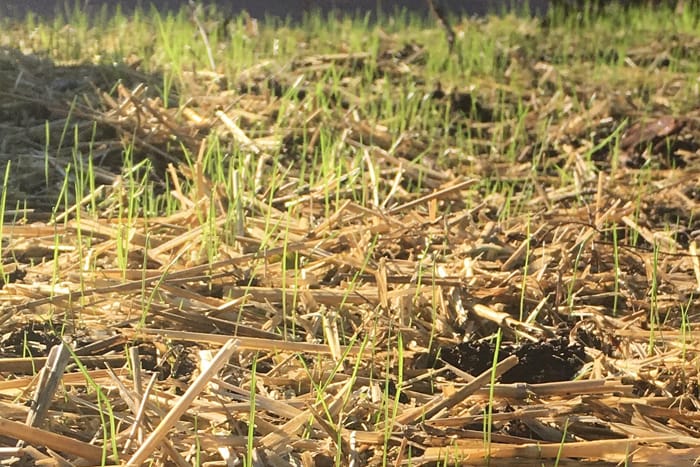
- Helps with dormant seeding.
But be careful not to get too aggressive. They recommend never cutting more than 1/3rd of the grass height at a single time because it might stress the grass plants going into winter. never cut more than one-third of the turf plant’s height in a single cutting (ex. moving your mowing height from 4 inches to 2.5 inches). This might stress the grass plants going into winter.
If you have a question about aeration, or would like a quote for having your yard aerated, contact the experts at Organic Bob.


Leave A Comment
You must be logged in to post a comment.